Scotland Health Urology Specialist Shares Insight on Incontinence and Prostate Cancer at Scotia Village
Print This Page

|
- October 27, 2026
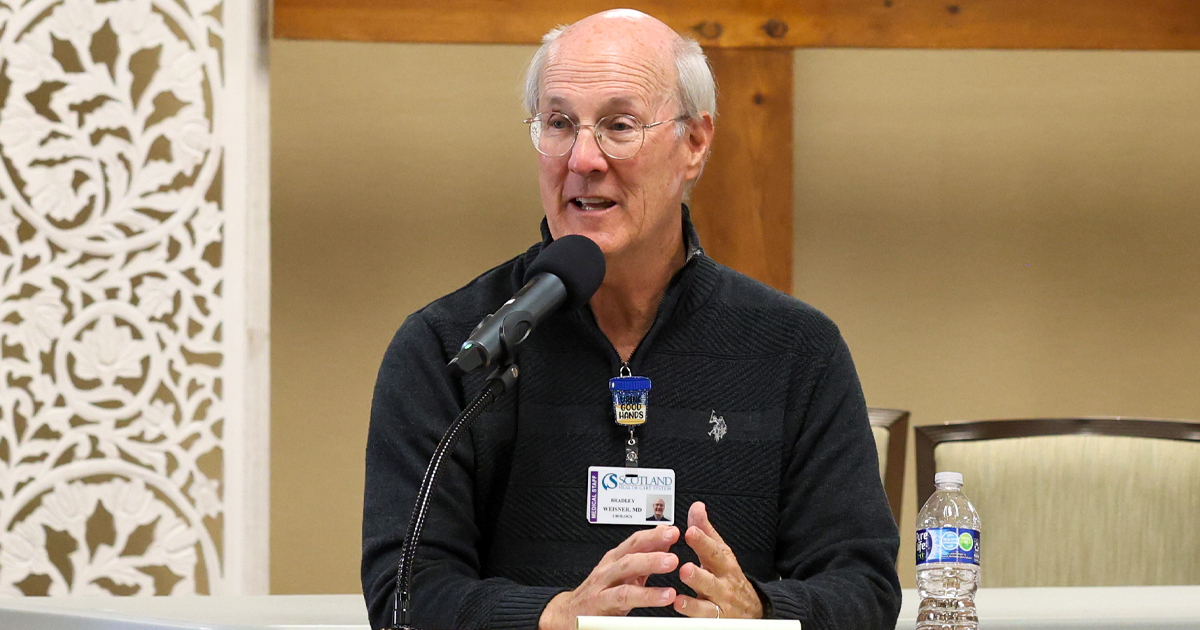
On Tuesday morning, residents of Scotia Village welcomed Dr. Bradley Weisner, a urologist with Laurinburg Urology, for an educational presentation focused on urinary incontinence and prostate cancer, two of the most common urologic conditions affecting older adults.
Dr. Weisner, who joined Scotland Health after retiring from a distinguished 30-year career in Charlotte, shared practical information about recognizing symptoms, understanding treatment options and knowing when to seek medical care. A native of North Carolina and a Navy veteran, Dr. Weisner drew on decades of experience caring for patients with a wide range of urologic conditions.
Addressing a Common but Often Overlooked Condition
During the first portion of the presentation, Dr. Weisner discussed urinary incontinence, explaining that while it becomes more common with age, it should not be viewed as an inevitable part of aging. He described several types of incontinence, including stress, urge, overflow and functional incontinence, and outlined how each can affect a person's quality of life.
"Many people limit their activities, avoid social events or even stay home because they are worried about leakage," Dr. Weisner explained. He emphasized that effective treatments are available and that patients do not have to suffer in silence.
Treatment options may include lifestyle changes, physical therapy, bladder training exercises, medications, nerve stimulation therapies and, in some cases, surgical procedures. Modern evaluation techniques are often noninvasive and can help providers determine the most appropriate treatment plan for each patient.
Understanding Prostate Cancer Risk and Screening
Dr. Weisner also provided an overview of prostate cancer, one of the most commonly diagnosed cancers among men. While a prostate cancer diagnosis can be frightening, he noted that advances in screening and treatment have significantly improved outcomes, allowing many men to live long, healthy lives after diagnosis.
The discussion covered risk factors such as family history, genetic predisposition, age, African American ethnicity and certain environmental exposures. Dr. Weisner explained the role of prostate-specific antigen (PSA) testing and highlighted newer diagnostic tools, including advanced urine and blood tests, prostate MRI imaging and targeted biopsy techniques that help physicians identify cancers more accurately than ever before.
He also discussed the growing use of active surveillance for low-risk prostate cancers, which allows some patients to avoid or delay treatment while maintaining their quality of life.
Advanced Care Available Close to Home
Residents learned about several modern treatment options now available through Scotland Health, including robotic-assisted surgery, radiation therapy partnerships, cryotherapy and high-intensity focused ultrasound (HIFU). Dr. Weisner emphasized that many advancements in urologic care have reduced side effects and improved recovery times compared to treatments available just a few decades ago.
Throughout the presentation, Dr. Weisner stressed the importance of personalized care and open conversations with healthcare providers about urinary symptoms, screening decisions and treatment goals.
"Our goal is not only to treat disease but also to preserve quality of life," he told attendees. "The earlier we identify concerns, the more options patients often have."
The event concluded with a question-and-answer session, where residents had the opportunity to discuss topics ranging from prostate screening recommendations to emerging treatments for enlarged prostate conditions.Laurinburg Urology currently offers care from a team of urologists and advanced practice providers committed to delivering comprehensive, compassionate care close to home. Residents interested in learning more about urologic services are encouraged to speak with their primary care provider or contact Laurinburg Urology at 910-276-1702.
About Scotland Health
Patient Links
For Employees
Partnerships

Accreditations