Federal and State Rural Health Leaders Visit Scotland Health, Honoring Innovation, Community Impact, and Rural Healthcare Leadership
Print This Page

|
- April 01, 2026 | News Category: Hospital News
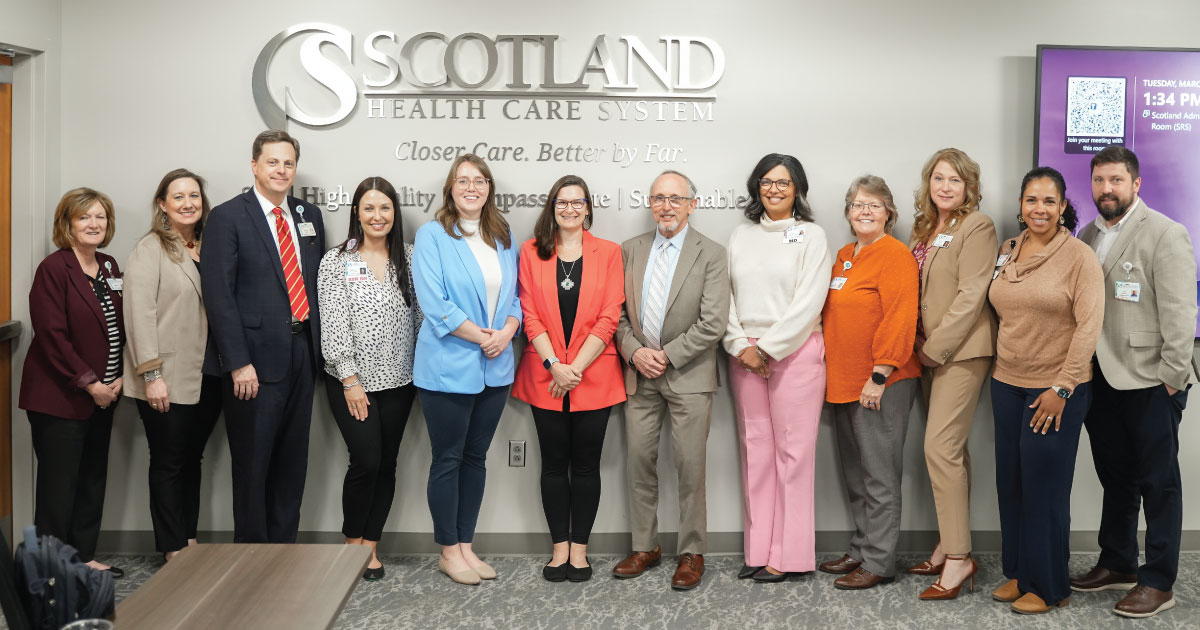
Scotland Health was honored to welcome leaders from the North Carolina Office of Rural Health and the US Department of Health and Human Services last week for a special onsite visit highlighting rural healthcare innovation, workforce development, population health efforts, and expanded access to care in southeastern North Carolina.
The state and federal representatives were enroute to a scheduled rural health meeting in Wilmington, North Carolina, when members of the North Carolina Office of Rural Health invited their guests from Washington, DC, to stop in Laurinburg. The visit provided an opportunity to showcase Scotland Health’s locally driven solutions and demonstrate how state and federal support is being leveraged to meet the unique needs of rural communities.
During their time on campus, the delegation toured Laurinburg Family Practice and Urgent Care. They also met with Scotland Health leadership to discuss community needs, workforce challenges, and population health initiatives.
“Thank you for spending this time with us,” said Pope. “We were honored that our state partners chose to bring federal leaders here so they could see the real impact of rural healthcare collaboration happening on the ground.”
The visit was prompted by Scotland Health’s receipt of state funding supporting uninsured care and behavioral health services. State representatives selected Scotland Health to be highlighted as part of their report to federal partners, showcasing the impact of these grant programs at the local level.
Dr. Shelly Lowery, Scotland Health Chief Medical Officer and Senior Vice President of Ambulatory Practices, shared how providers are actively using community health programs to ensure continuity of care beyond the hospital setting. She noted that community-based resources are now built into routine clinical workflows, particularly during discharge planning and when recognized as a need of patients in our practices.
“For our providers, community health programs are essential tools for continuing care,” Lowery said. “Nearly 44 percent of patients discharged by our hospitalists are now receiving a referral to a community health worker. That connection allows us to address real-world barriers that can otherwise negatively impact recovery and long-term health.”
Jamie Cicali, Executive Director of Population Health and Continuum of Care, expanded on how Scotland Health’s integrated care teams are helping limit the negative effects of social drivers of health on patient outcomes. She highlighted the combined efforts of Community Health Workers, Community Health Paramedics, and Nurse Navigators, who work alongside clinical teams to support patients with challenges such as transportation, food access, housing stability, medication adherence, and follow-up care.
“By meeting patients where they are—both physically and socially—we are able to reduce barriers that often interfere with health and healing,” Cicali said. “These teams play a critical role in keeping patients connected, supported, and engaged in their care.”
Workforce development was also a key focus of the visit. Christi Meggs, Scotland Health Senior Vice President of Human Resources, discussed the organization’s efforts to recruit, educate, and retain nursing staff, as well as its continued investment in education and training opportunities for allied health professionals to strengthen the local workforce pipeline. She also shared information about the recent addition of on-site childcare for employees, an initiative designed to support working families and improve recruitment and retention.
“Supporting our healthcare workforce means supporting the whole person,” Meggs said. “By investing in education, career pathways, and family-friendly resources like on-site childcare, we are building a strong and resilient workforce for our rural communities.”
Federal and state leaders praised Scotland Health’s locally focused approach and commitment to innovation. Rachel Moscato, Director of the Hospital State Division with the Federal Office of Rural Health Policy, emphasized the importance of seeing rural healthcare efforts firsthand.
“Getting out into communities like Laurinburg allows us to better understand how policies and programs support real work on the ground,” Moscato said.
Tom Morris, Associate Administrator for Rural Health Policy with the Health Resources and Services Administration, described the visit as eye-opening and praised Scotland Health’s integrated care model and community focus. Additional attendees included Suzanne Eslyn, Public Health Analyst; Allison Owen, Deputy Director of the North Carolina Office of Rural Health; Leslie Walcott, NC Rural Health Operations Specialist; and Maggie Sauer, Director of the NCDHHS Office of Rural Health.
During the visit, Sauer formally presented David Pope with his Community Star Award, recognizing him as North Carolina’s 2025 Community Star. Pope was originally announced as the award recipient during National Rural Health Day celebrations in Asheville last November, though the physical award was not available at that time. Each year, the National Organization of State Offices of Rural Health honors one Community Star per state for making a meaningful, positive impact in rural communities.
Scotland Health continues to expand access to care through integrated behavioral health services, community health workers, community paramedics, nurse navigation, maternal health outreach, workforce development initiatives, and care-at-home programs designed to reduce avoidable emergency department visits.
“We are grateful that our state partners encouraged this visit and proud to show our federal colleagues how rural innovation is being put into action here,” Pope said. “Strong collaboration allows us to better serve our patients, support our workforce, and strengthen our communities.”
About Scotland Health
Patient Links
For Employees
Partnerships

Accreditations